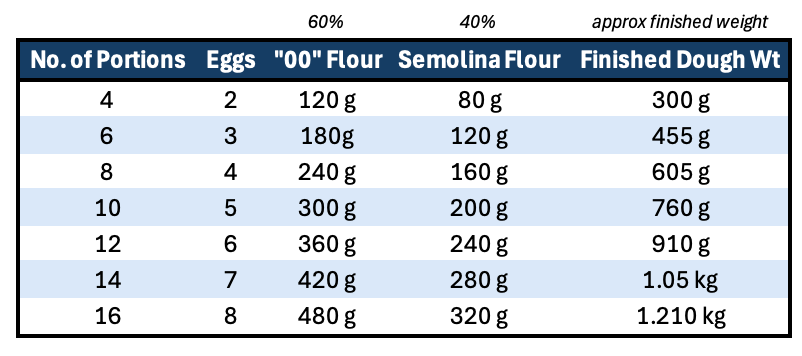
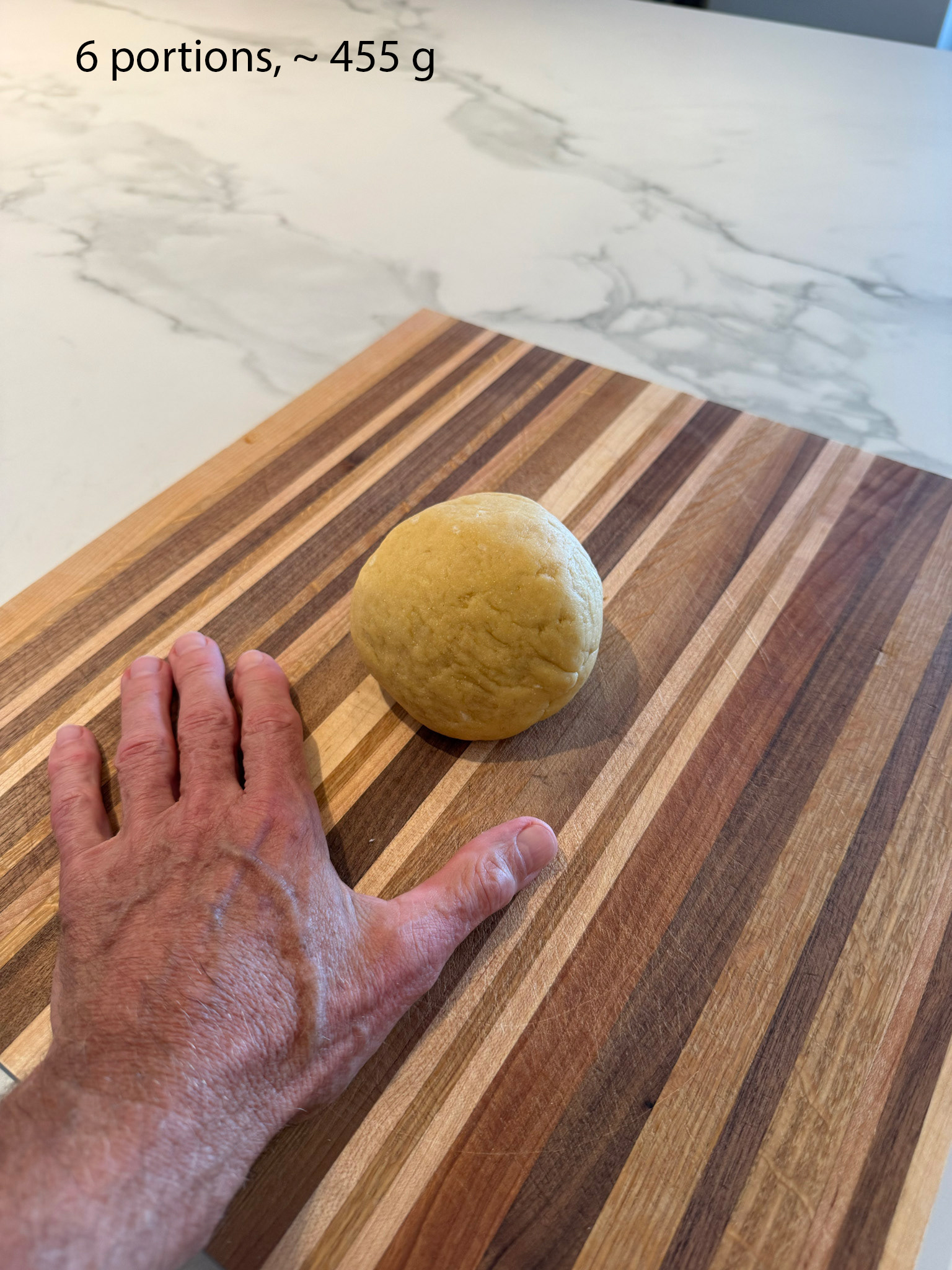
Ingredient Portion Matrix
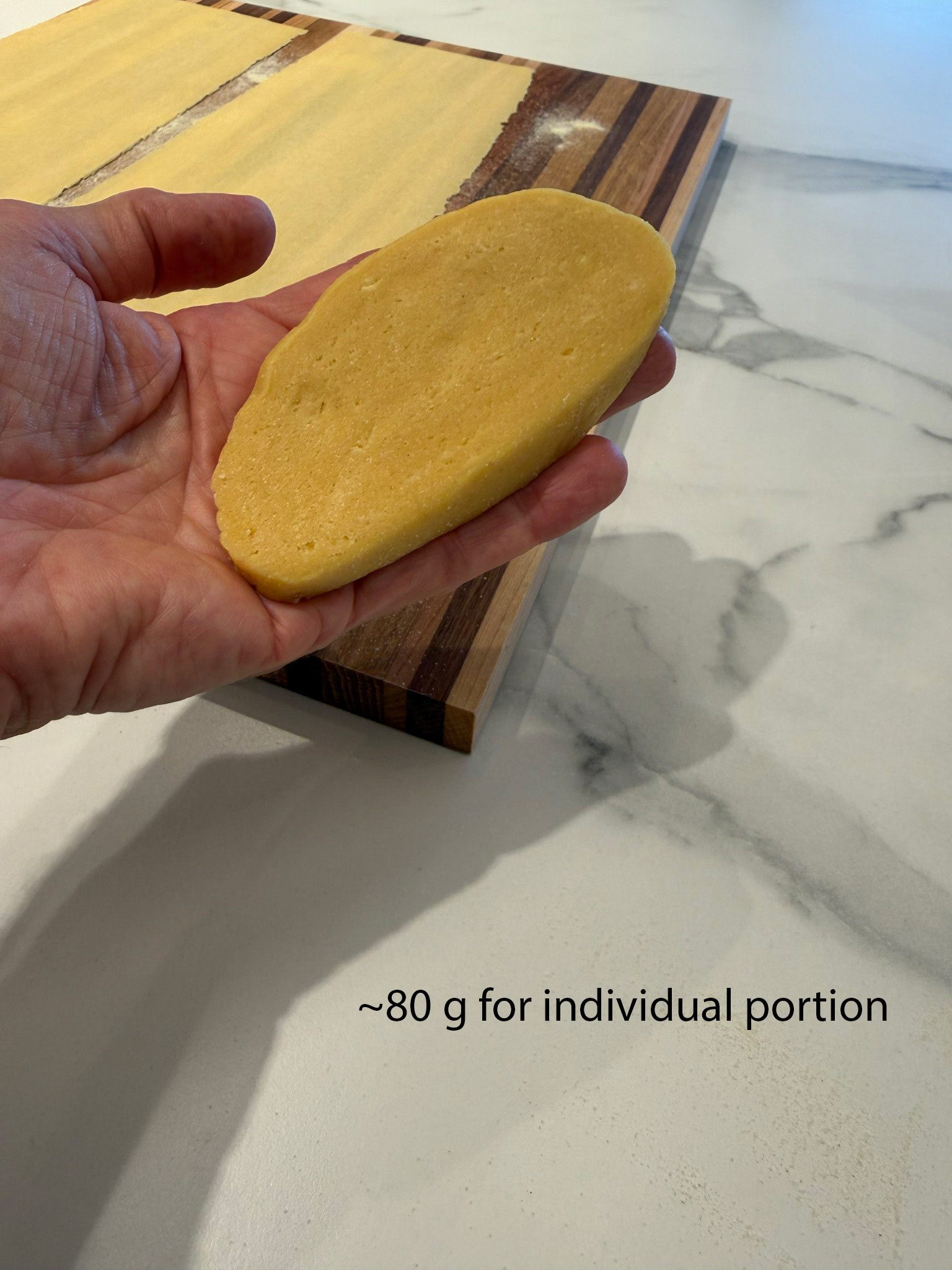
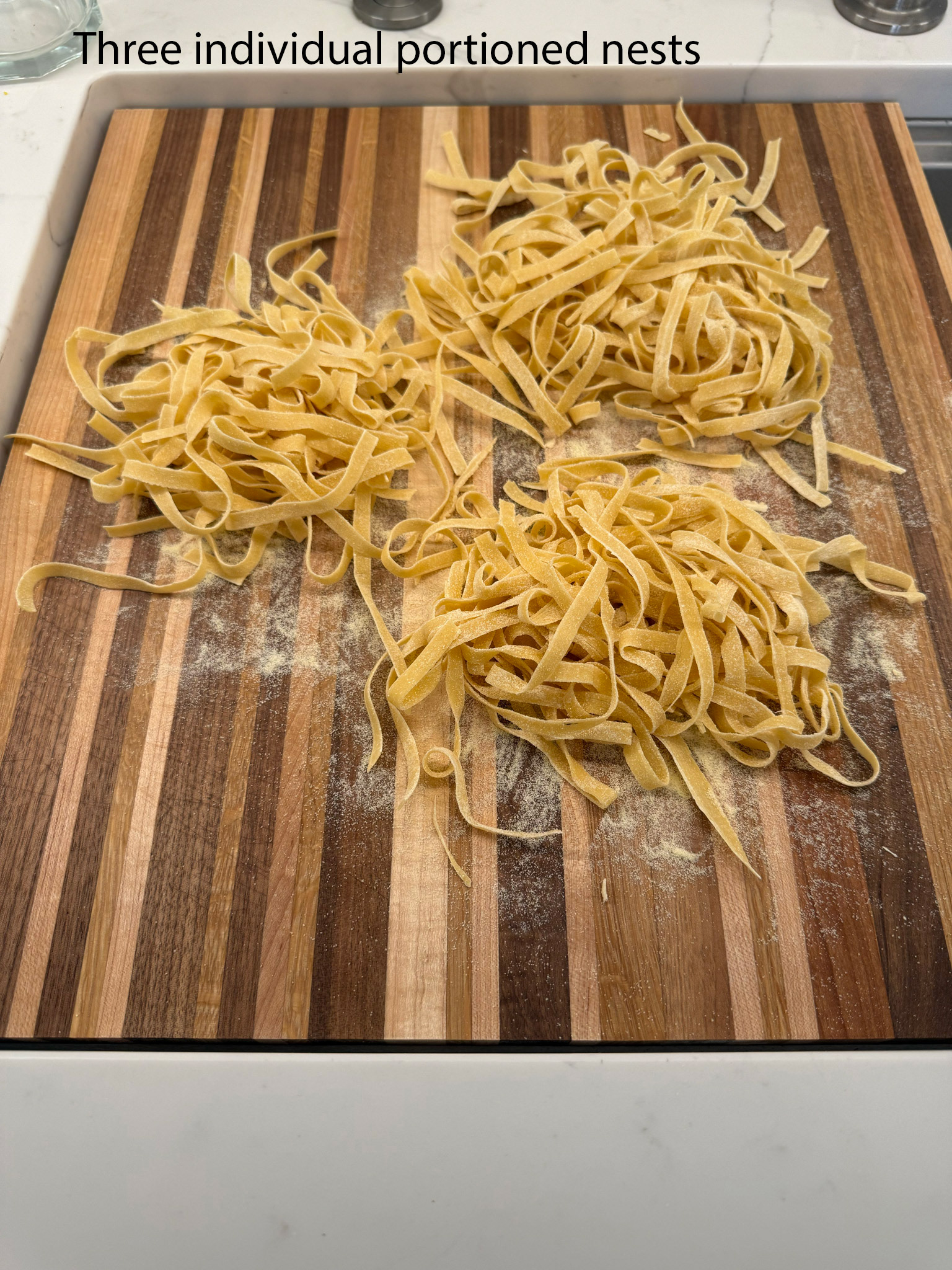
For a main course, allow 75–80 g of uncooked pasta per person. This quantity provides a generous serving with enough for a small second helping if desired.
For a first-course portion, plan on about 50 g per person.
Recipe
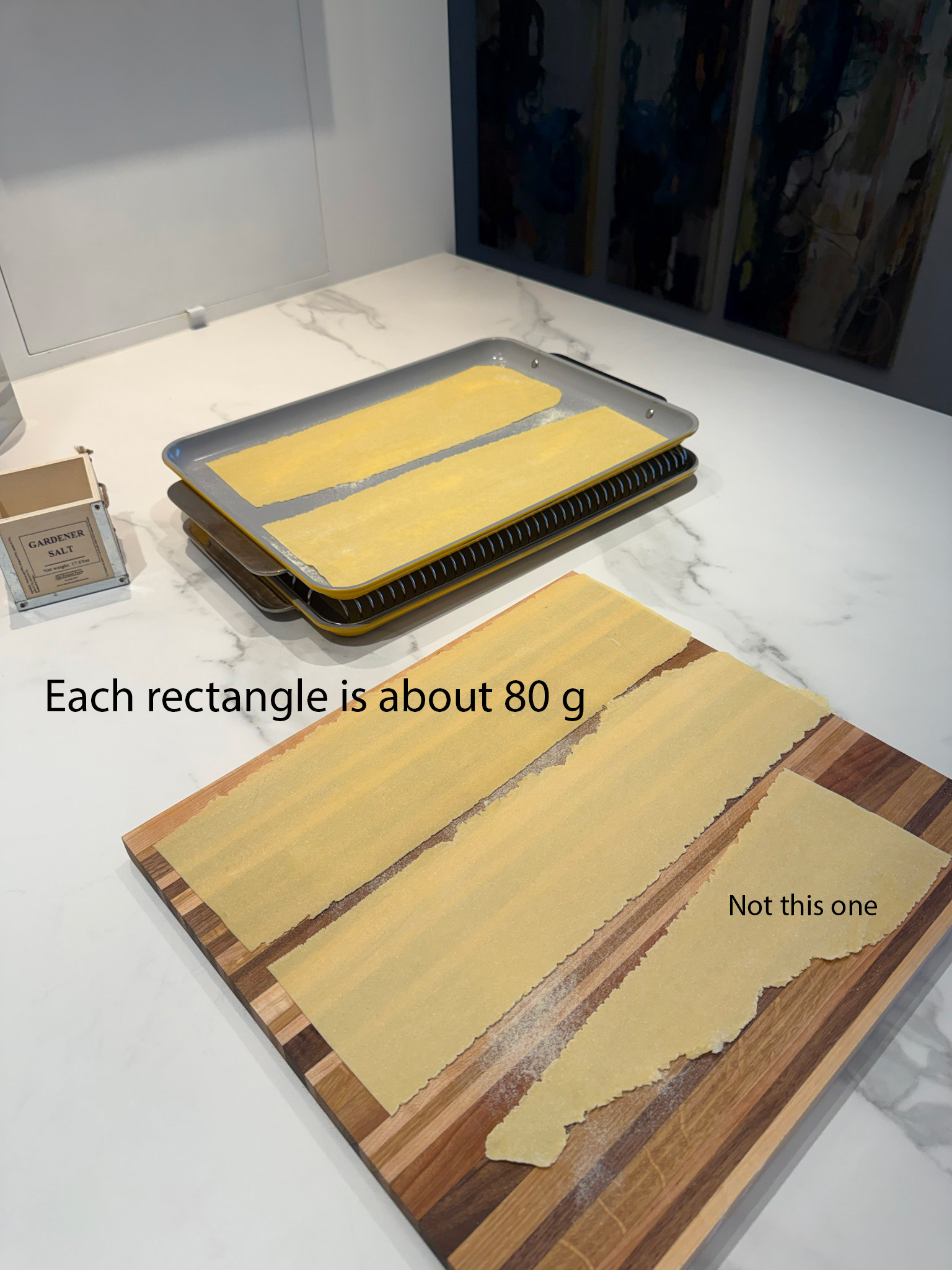
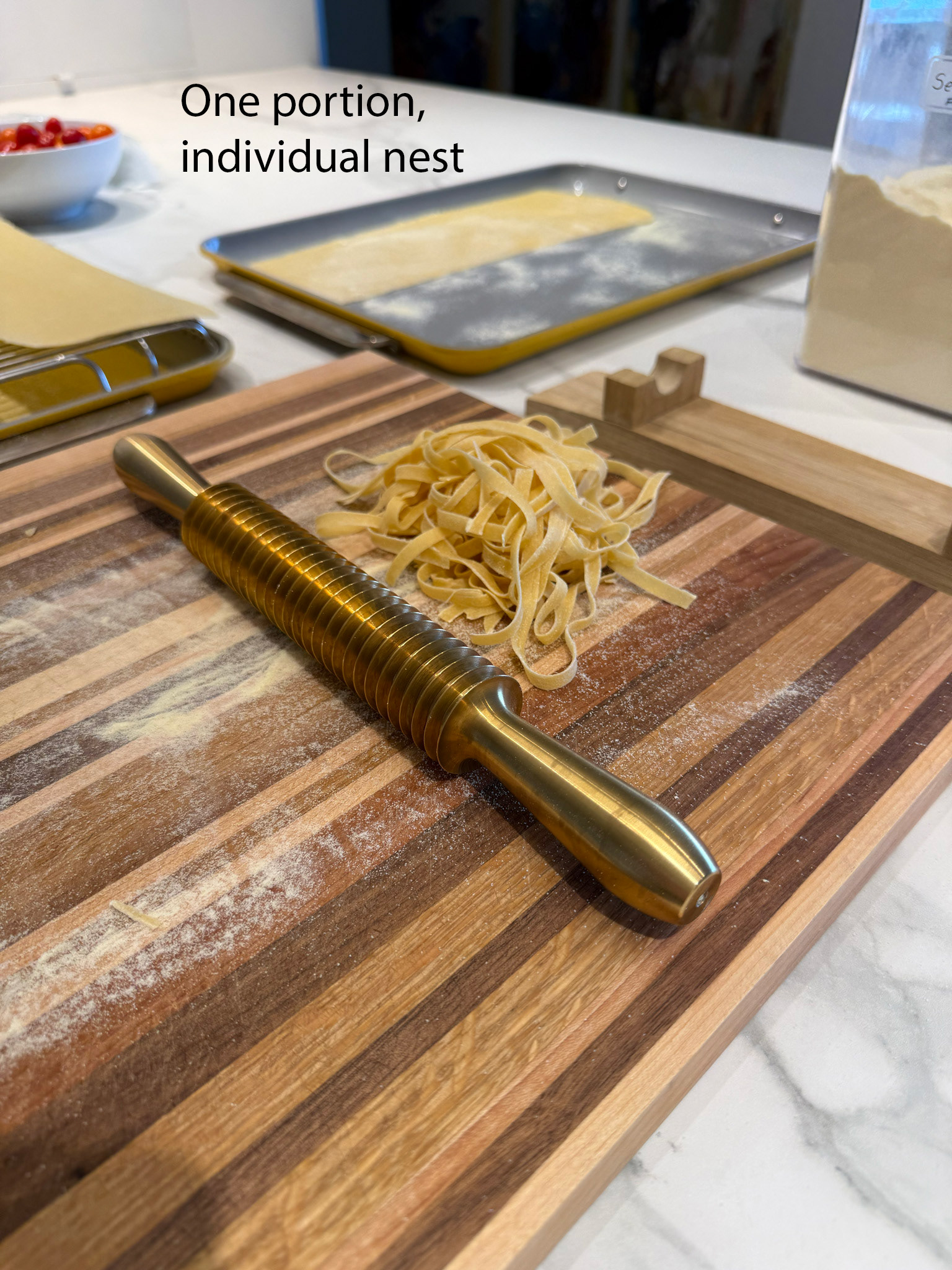
Place all ingredients in mixing bowl (I use a power mixer) (Feb '26: I've also just started to mix and knead all by hand), add salt to taste and mix until dough forms. Turn dough out onto a floured surface and knead until very smooth. Place dough in a plastic bag (or other air restricted container - so it does not dry out) for minimum of 30 minutes. When soft, cut off portioned amount, press through pasta press up to number 6 using plenty of Semolina flour. Leave sheets out on the counter to dry out a bit, flipping the sheets over if very moist to dry out both sides. Cut into desired shape. Cluster into nests (again, using plenty of Semolina flour). Cook in boiling salted water. Fresh pasta cooks fast (about 3 - 4 minutes depending on thickness of the pasta).
Dave's Modification
I have started to add additional yolks, giving the pasta a deeper, rich color and more flavor depth. For the 4 portion amounts, I add one additional yolk. For 8 portions I would add two additional yolks, etc. You will need to slightly increase the flour to account for the additional liquid.
Pasta Storage
1. Fresh pasta (only partially dried, still pliable)
In a paper bag at room temp: 1–2 days max.
Risk: mold or spoilage, especially in humid environments.
Safer option: refrigerate in a paper bag or container (lightly floured) for 2–3 days.
2. Fully dried pasta (brittle, snaps cleanly like store-bought)
If dried completely (can take 24–48 hrs depending on humidity, thickness, and airflow):
In a paper bag, kept in a cool, dry pantry: up to 4–8 weeks.
Better if stored in an airtight jar or tin after drying: 2–3 months or longer.
Freezing Pasta Nests
You can freeze pasta nests successfully, but:
Dust well with semolina before forming nests. The semolina keeps strands separate during freezing.
Flash-freeze the nests on a tray (single layer, not touching) for 1–2 hours until firm, then transfer them to a bag or container. This keeps them from “gluing” together as one frozen mass.
If you skip the semolina dusting or don’t flash-freeze individually, the nests will compress and clump.
If that happens, you may end up with a “pasta ball” that doesn’t unravel well in boiling water.
Cooking from Frozen
Drop the frozen nests directly into boiling salted water — no thawing.
Cook time: usually just 1–2 minutes longer than fresh.